math105-s22:s:mchlxo:start
Differences
This shows you the differences between two versions of the page.
| Both sides previous revision Previous revision Next revision | Previous revision | ||
|
math105-s22:s:mchlxo:start [2022/05/06 08:24] mchlxo [Proposition 1] |
math105-s22:s:mchlxo:start [2026/02/21 14:41] (current) |
||
|---|---|---|---|
| Line 80: | Line 80: | ||
| $$ E(\phi) = \int_{\mathcal{P}} \phi(\omega) d \mu(\omega)$$ | $$ E(\phi) = \int_{\mathcal{P}} \phi(\omega) d \mu(\omega)$$ | ||
| for each $\phi(\omega)$ with a continuous $F$ on $\mathcal{P}$ | for each $\phi(\omega)$ with a continuous $F$ on $\mathcal{P}$ | ||
| + | |||
| + | ==== References ==== | ||
| + | Sternberg, Shlomo Z. 2014. “Wiener Measure.” Harvard Math 201a, November 11.\\ | ||
| + | \\ | ||
| + | Taylor, Michael E. 2006. Measure Theory and Integration. Graduate Studies in Mathematics, | ||
| + | \\ | ||
| + | Wright, David G. 1994. “Tychonoff’s Theorem.” Proceedings of the American Mathematical Society 120 (3): 985–87. https:// | ||
| + | |||
| + | |||
| ===== Resources ===== | ===== Resources ===== | ||
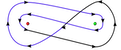
| A {{ : | A {{ : | ||
math105-s22/s/mchlxo/start.1651825465.txt.gz · Last modified: 2026/02/21 14:43 (external edit)
Page Tools
Except where otherwise noted, content on this wiki is licensed under the following license: CC Attribution-Share Alike 4.0 International


